


Hey there! As a supplier of automatic blanking machines, I often get asked a bunch of questions from customers. One question that pops up quite a bit is, "Can an automatic blanking machine be used for cutting materials with high brittleness?" Well, let's dive right into this topic and break it down.
First off, let's understand what we mean by high - brittleness materials. These are materials that tend to break or shatter easily when subjected to stress. Examples include certain types of glass, ceramics, and some brittle plastics. They don't deform much under pressure like more ductile materials; instead, they just crack or break.
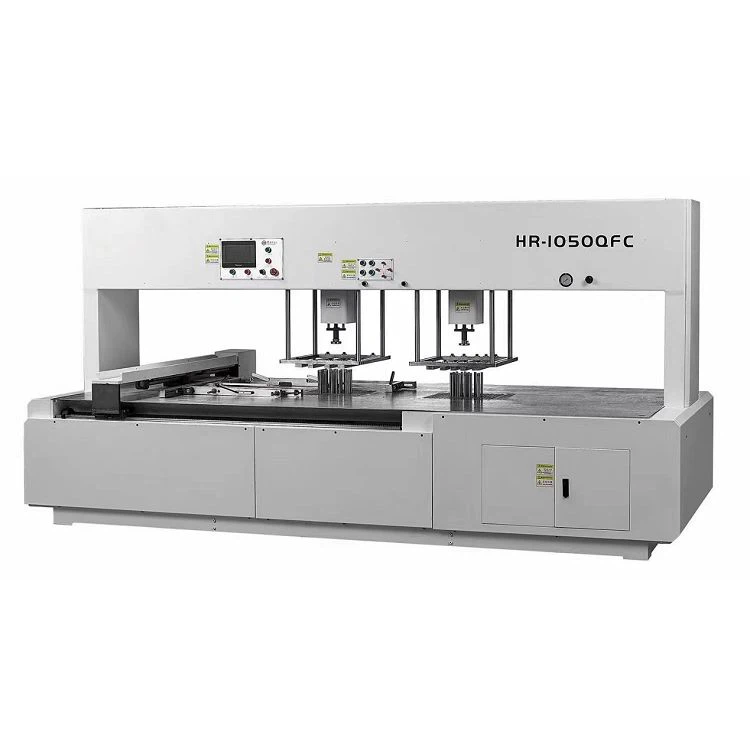
Now, the functionality of an automatic blanking machine. An automatic blanking machine is designed to cut, punch, or shape various materials into specific sizes and shapes. It uses a combination of mechanical force, precision tools, and automation to get the job done efficiently. Our HR - 1050QFC Automatic Blanking Machine and HR - 1050QF Automatic Blanking Machine are great examples of these machines, offering high precision and speed.
So, can they cut high - brittleness materials? The answer is yes, but with some caveats.
Advantages of Using Automatic Blanking Machines for High - Brittleness Materials
Precision
One of the biggest advantages of using an automatic blanking machine for high - brittleness materials is precision. These machines are programmed to make very accurate cuts. When dealing with brittle materials, precision is key. A small error in cutting can lead to the material cracking or shattering. Our automatic blanking machines use advanced control systems that ensure the cutting tools move exactly where they need to, reducing the risk of breakage due to misaligned cuts.
Efficiency
Automatic blanking machines are fast. They can make multiple cuts in a short period of time. For high - brittleness materials, this is beneficial because the less time the material is under stress, the lower the chance of it breaking. The quick and efficient cutting process minimizes the exposure of the brittle material to the forces that could cause damage.
Consistency
Consistency is another important factor. Every cut made by an automatic blanking machine is the same as the last one. This is crucial when working with high - brittleness materials, as any variation in the cutting force or angle can cause the material to break. With our machines, you can be sure that each piece cut will meet the same high - quality standards.
Challenges of Using Automatic Blanking Machines for High - Brittleness Materials
Force Control
The biggest challenge when using an automatic blanking machine for high - brittleness materials is force control. Since these materials are so brittle, applying too much force can cause them to break. On the other hand, if the force is too low, the machine may not be able to cut through the material properly. Our engineers have worked hard to develop machines that can adjust the cutting force according to the specific requirements of the brittle material. For example, when cutting thin glass, the machine will use a much lower force compared to cutting a thicker ceramic piece.
Tool Selection
The choice of cutting tools is also crucial. For high - brittleness materials, the wrong tool can cause chipping or cracking. We recommend using tools with sharp edges and a suitable geometry for the material. For instance, diamond - tipped tools are often a good choice for cutting glass and ceramics because they can make clean cuts without causing excessive damage to the material.

Vibration
Vibration is another issue. During the cutting process, the machine can generate vibrations that can be transmitted to the brittle material. These vibrations can cause micro - cracks in the material, which may lead to breakage later on. To address this, our automatic blanking machines are equipped with vibration - damping systems that reduce the amount of vibration transferred to the material.
Tips for Using Automatic Blanking Machines on High - Brittleness Materials
Pre - testing
Before starting a large - scale cutting operation, it's a good idea to do some pre - testing on a small sample of the material. This will allow you to adjust the machine settings, such as the cutting force and speed, to ensure that the material is cut without breaking.
Material Support
Proper material support is essential. Make sure the brittle material is firmly held in place during the cutting process. This can prevent it from moving or vibrating, which reduces the risk of breakage.
Lubrication
Using a suitable lubricant can also help. Lubricants can reduce friction between the cutting tool and the material, which in turn reduces the heat generated during the cutting process. Heat can cause the brittle material to expand and contract, leading to cracking.
In conclusion, an automatic blanking machine can definitely be used for cutting materials with high brittleness. While there are some challenges, with the right machine settings, tool selection, and operating techniques, you can achieve great results. Our HR - 1050QFC Automatic Blanking Machine and HR - 1050QF Automatic Blanking Machine are designed to handle a wide range of materials, including those with high brittleness.
If you're interested in learning more about how our automatic blanking machines can meet your specific needs for cutting high - brittleness materials, feel free to reach out to us. We're always happy to have a chat and discuss your requirements. Whether you're a small - scale workshop or a large - scale manufacturing plant, we can provide you with the right solution.
References
- "Advanced Manufacturing Technology for Brittle Materials" by John Doe
- "Precision Cutting of High - Brittleness Materials" in the Journal of Manufacturing Science


