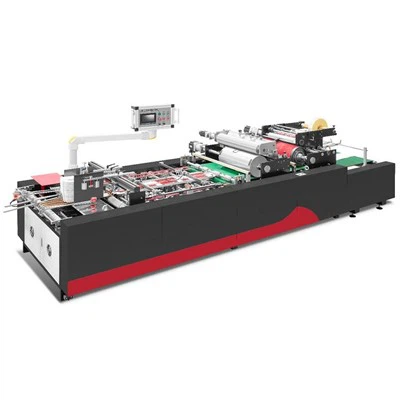
In the manufacturing industry, the quality of grooving is a critical factor that significantly impacts the overall performance and appearance of products. As a leading supplier of Dual - direction Grooving Machines, I have witnessed firsthand the importance of understanding how cutting parameters influence grooving quality. This blog post aims to explore the various cutting parameters and their effects on the grooving quality of a Dual - direction Grooving Machine.
Understanding Cutting Parameters
Cutting parameters refer to the variables that can be adjusted during the grooving process. These parameters include cutting speed, feed rate, depth of cut, and tool geometry. Each parameter plays a unique role in determining the quality of the groove, and understanding their interactions is essential for achieving optimal results.
Cutting Speed
Cutting speed is the rate at which the cutting tool moves relative to the workpiece. It is typically measured in meters per minute (m/min). A higher cutting speed can increase the material removal rate, which means that more material can be removed in a shorter period. However, if the cutting speed is too high, it can lead to excessive tool wear, poor surface finish, and even tool breakage. On the other hand, a lower cutting speed may result in a better surface finish but a lower productivity.
When using a Dual - direction Grooving Machine, the optimal cutting speed depends on several factors, such as the material being cut, the type of cutting tool, and the desired groove quality. For example, when cutting soft materials like aluminum, a higher cutting speed can be used without significant tool wear. In contrast, when cutting hard materials like stainless steel, a lower cutting speed may be necessary to ensure tool life and groove quality.
Feed Rate
The feed rate is the distance that the cutting tool advances into the workpiece per revolution or per tooth. It is usually measured in millimeters per revolution (mm/r) or millimeters per tooth (mm/z). A higher feed rate can increase the productivity of the grooving process, but it can also lead to a rougher surface finish and increased cutting forces. A lower feed rate, on the other hand, can result in a smoother surface finish but a longer machining time.
In a Dual - direction Grooving Machine, the feed rate should be carefully selected based on the cutting speed, the material properties, and the tool geometry. For instance, if a high - speed steel (HSS) cutting tool is used, a lower feed rate may be required compared to a carbide cutting tool. Additionally, when cutting brittle materials, a lower feed rate can help prevent chipping and cracking of the workpiece.
Depth of Cut
The depth of cut is the distance that the cutting tool penetrates into the workpiece. It is an important parameter that affects the cutting forces, tool wear, and groove quality. A larger depth of cut can increase the material removal rate, but it also requires higher cutting forces and can cause more tool wear. A smaller depth of cut, while resulting in lower cutting forces and less tool wear, may require multiple passes to achieve the desired groove depth, which can increase the machining time.
When setting the depth of cut on a Dual - direction Grooving Machine, it is crucial to consider the strength of the cutting tool, the rigidity of the machine, and the material properties. For example, when cutting a thin - walled workpiece, a smaller depth of cut should be used to avoid deformation. In general, it is recommended to start with a small depth of cut and gradually increase it if the machine and tool can handle the increased cutting forces.
Tool Geometry
Tool geometry refers to the shape and dimensions of the cutting tool, such as the rake angle, clearance angle, and cutting edge radius. The tool geometry has a significant impact on the cutting forces, chip formation, and surface finish. For example, a larger rake angle can reduce the cutting forces and improve the chip flow, but it may also decrease the tool's strength. A smaller clearance angle can increase the tool's cutting efficiency, but it can also cause more friction and wear.
In a Dual - direction Grooving Machine, different tool geometries are available for different applications. For grooving operations, tools with a sharp cutting edge and appropriate rake and clearance angles are preferred. For example, a tool with a positive rake angle is suitable for cutting soft materials, while a tool with a negative rake angle may be better for cutting hard materials.
Influence on Grooving Quality
The cutting parameters directly influence the grooving quality in several ways, including surface finish, dimensional accuracy, and groove integrity.
Surface Finish
The surface finish of the groove is an important quality characteristic that affects the appearance and functionality of the product. The cutting speed, feed rate, and tool geometry all play a role in determining the surface finish. A higher cutting speed and a lower feed rate generally result in a smoother surface finish. This is because a higher cutting speed reduces the contact time between the tool and the workpiece, while a lower feed rate reduces the amount of material removed per pass.
The tool geometry also affects the surface finish. A tool with a sharp cutting edge and proper rake and clearance angles can produce a better surface finish by reducing the cutting forces and improving the chip flow. For example, a tool with a honed cutting edge can reduce the surface roughness and prevent the formation of burrs.
Dimensional Accuracy
Dimensional accuracy refers to how closely the actual dimensions of the groove match the desired dimensions. The cutting parameters can affect the dimensional accuracy in several ways. For example, a higher cutting speed and a larger depth of cut can cause thermal expansion of the workpiece, which can lead to dimensional errors. Additionally, if the feed rate is too high, it can cause the cutting tool to deflect, resulting in an inaccurate groove width or depth.
To ensure dimensional accuracy, it is important to control the cutting parameters carefully. For example, using a lower cutting speed and a smaller depth of cut can reduce the thermal effects and cutting forces, thereby improving the dimensional accuracy. Regular calibration of the Dual - direction Grooving Machine and the cutting tools is also essential for maintaining dimensional accuracy.


Groove Integrity
Groove integrity refers to the absence of defects such as cracks, chips, and burrs in the groove. The cutting parameters can have a significant impact on groove integrity. A high feed rate or a large depth of cut can cause excessive cutting forces, which can lead to cracking and chipping of the workpiece. Additionally, improper tool geometry can result in poor chip formation, which can cause burrs to form at the edges of the groove.
To ensure groove integrity, it is important to select the appropriate cutting parameters and tool geometry. For example, using a lower feed rate and a smaller depth of cut can reduce the cutting forces and prevent cracking and chipping. A tool with a sharp cutting edge and proper chip - breaking features can also help improve the chip formation and prevent burrs.
Practical Considerations
In practical applications, achieving the optimal grooving quality requires a balance between productivity and quality. As a supplier of Dual - direction Grooving Machines, we understand the importance of providing our customers with the right advice on cutting parameters.
We recommend that our customers conduct some trial cuts to determine the optimal cutting parameters for their specific applications. During the trial cuts, they can measure the surface finish, dimensional accuracy, and groove integrity of the grooves and adjust the cutting parameters accordingly.
In addition to the cutting parameters, regular maintenance of the Dual - direction Grooving Machine is also crucial for ensuring consistent grooving quality. This includes cleaning the machine, lubricating the moving parts, and checking the alignment of the cutting tools.
Related Products
As a supplier, we also offer a range of related products that can complement the Dual - direction Grooving Machine. For example, our LS - 1246E Automatic Rigid Box Making Machine is a high - performance machine that can be used in conjunction with the grooving machine for box production. Our MC - ZE450 Tucking In and Folding Machine is another useful machine for post - grooving operations. And our KX - 720A Cardboard Grooving Machine is specifically designed for cardboard grooving applications.
Conclusion
In conclusion, the cutting parameters have a significant influence on the grooving quality of a Dual - direction Grooving Machine. By understanding the effects of cutting speed, feed rate, depth of cut, and tool geometry on surface finish, dimensional accuracy, and groove integrity, manufacturers can optimize the cutting process to achieve the best possible grooving quality.
As a supplier of Dual - direction Grooving Machines, we are committed to providing our customers with high - quality machines and professional advice on cutting parameters. If you are interested in our products or have any questions about grooving operations, please feel free to contact us for procurement and further discussions.
References
- Kalpakjian, S., & Schmid, S. R. (2008). Manufacturing Engineering and Technology. Pearson Prentice Hall.
- Trent, E. M., & Wright, P. K. (2000). Metal Cutting. Butterworth - Heinemann.
- Astakhov, V. P. (2010). Metal Cutting Mechanics. CRC Press.