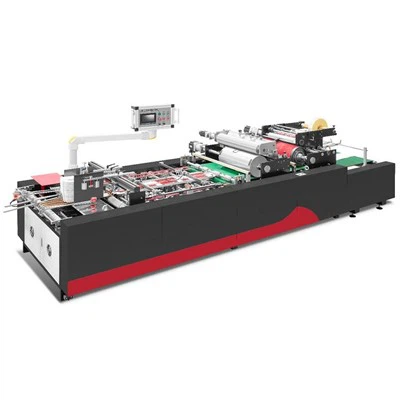
As a trusted supplier of Corner Pasting Machines, I understand the importance of achieving the optimal paste flow rate for seamless and efficient box production. The paste flow rate directly impacts the quality of the pasting process, affecting the strength and appearance of the finished boxes. In this blog post, I will share some practical tips on how to adjust the paste flow rate of a corner pasting machine to ensure consistent and high-quality results.


Understanding the Basics of Paste Flow Rate
Before diving into the adjustment process, it's essential to understand what paste flow rate means and why it matters. The paste flow rate refers to the amount of paste that is dispensed by the machine per unit of time. It is typically measured in milliliters per minute (ml/min) or grams per minute (g/min). A proper paste flow rate ensures that enough paste is applied to create a strong bond between the box components while avoiding excessive paste that can lead to messy and uneven pasting.
Factors Affecting Paste Flow Rate
Several factors can influence the paste flow rate of a corner pasting machine. Understanding these factors is crucial for making accurate adjustments. Here are some of the key factors to consider:
- Paste Viscosity: The viscosity of the paste is one of the most significant factors affecting the flow rate. Thicker pastes tend to flow more slowly, while thinner pastes flow more easily. It's important to use a paste with the appropriate viscosity for your specific application.
- Pump Pressure: The pump is responsible for delivering the paste to the pasting head. Adjusting the pump pressure can directly affect the flow rate. Higher pump pressure generally results in a higher flow rate, while lower pressure reduces the flow rate.
- Nozzle Size: The size of the nozzle through which the paste is dispensed also plays a role in the flow rate. A larger nozzle allows for a higher flow rate, while a smaller nozzle restricts the flow.
- Machine Speed: The speed at which the corner pasting machine operates can impact the paste flow rate. Faster machine speeds may require a higher flow rate to ensure sufficient paste is applied.
Steps to Adjust the Paste Flow Rate
Now that we have a better understanding of the factors affecting paste flow rate, let's explore the steps to adjust it effectively:
Step 1: Check the Paste Viscosity
Before making any adjustments, ensure that the paste you are using has the correct viscosity. You can use a viscometer to measure the viscosity of the paste. If the paste is too thick, you may need to add a small amount of water or a thinning agent to reduce its viscosity. Conversely, if the paste is too thin, you can add a thickening agent to increase its viscosity.
Step 2: Adjust the Pump Pressure
The pump pressure is a key parameter for controlling the paste flow rate. Most corner pasting machines have a pressure adjustment knob or valve that allows you to increase or decrease the pump pressure. Start by setting the pump pressure to a low level and gradually increase it while observing the paste flow. You can use a flow meter or simply visually inspect the paste application to determine if the flow rate is appropriate.
Step 3: Select the Right Nozzle Size
If the paste flow rate is still not satisfactory after adjusting the pump pressure, you may need to consider changing the nozzle size. Refer to the machine's manual or consult with the manufacturer to determine the appropriate nozzle size for your specific application. A larger nozzle can increase the flow rate, while a smaller nozzle can reduce it.
Step 4: Consider the Machine Speed
The machine speed can also affect the paste flow rate. If you are running the machine at a high speed, you may need to increase the paste flow rate to ensure sufficient paste is applied. Conversely, if the machine speed is low, you can reduce the flow rate to avoid over - application of paste.
Step 5: Test and Fine - Tune
After making the initial adjustments, it's important to test the machine on a sample box. Observe the quality of the pasting, including the strength of the bond and the appearance of the paste application. If necessary, make further fine - tuning adjustments to the pump pressure, nozzle size, or other parameters until you achieve the desired paste flow rate and pasting quality.
Troubleshooting Common Issues
Even with proper adjustment, you may encounter some common issues related to paste flow rate. Here are some troubleshooting tips:
- Low Paste Flow: If the paste flow rate is too low, check for clogs in the pump, hoses, or nozzles. Clean or replace any clogged components. Also, ensure that the pump pressure is set correctly and that the paste viscosity is appropriate.
- High Paste Flow: If the paste flow rate is too high, reduce the pump pressure. You may also need to consider using a smaller nozzle or adjusting the machine speed.
- Uneven Paste Application: Uneven paste application can be caused by a variety of factors, including clogged nozzles, improper nozzle alignment, or inconsistent paste viscosity. Check and clean the nozzles, ensure proper alignment, and maintain a consistent paste viscosity.
The Role of Quality Machines in Paste Flow Adjustment
Investing in high - quality corner pasting machines can significantly simplify the process of adjusting the paste flow rate. Our company offers a range of advanced corner pasting machines that are designed with precision and ease of use in mind. In addition to corner pasting machines, we also provide other essential equipment for rigid box production, such as the LS - 1246B Automatic Smart Rigid Box Making Machine, the LS - 1200G Automatic Cutting and Grooving Machine, and the MC - SY - 380 Screen Gluing Machine. These machines are engineered to work seamlessly together, ensuring a smooth and efficient production process.
Conclusion
Adjusting the paste flow rate of a corner pasting machine is a critical step in achieving high - quality box production. By understanding the factors that affect the flow rate and following the steps outlined in this blog post, you can ensure that your machine is operating at its optimal performance. If you have any questions or need further assistance with adjusting the paste flow rate of your corner pasting machine, or if you are interested in exploring our range of rigid box production equipment, please feel free to contact us. We are committed to providing you with the best solutions for your box - making needs.
References
- "Handbook of Rigid Box Manufacturing", Industry Press, 20XX
- "Paste Application Techniques in Packaging", Packaging Research Institute, 20XX