Can an Automatic Positioning Machine be used in a high - radiation environment?
As a long - standing supplier of automatic positioning machines, I've received numerous inquiries about the adaptability of our machines in high - radiation environments. Given that high - radiation areas such as nuclear power plants, some medical radiation facilities, and certain industrial radiography sectors have specific requirements for equipment, it is crucial to assess whether our automatic positioning machines can successfully operate under such circumstances.
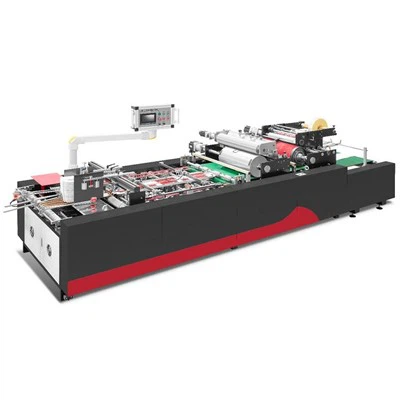
Firstly, let's briefly understand the working principle of automatic positioning machines. These machines are designed to accurately position objects in a given space. They typically use a combination of sensors, actuators, and control systems. For instance, sensors detect the position of an object, and then the control system processes this information and sends commands to the actuators to move the object to the correct position. The LS - 40A Corner Pasting Machine [/rigid - box - machine/ls - 40a - corner - pasting - machine.html] is a classic example of our automatic positioning technology at work. It precisely positions the corners of boxes during the pasting process, ensuring high - quality finishing.
However, when it comes to high - radiation environments, several factors pose challenges to the normal operation of automatic positioning machines. Radiation can cause damage to electronic components at the physical level. High - energy radiation particles, such as gamma rays and neutrons, can penetrate the materials of electronic components. These particles may ionize atoms within the semiconductor materials of integrated circuits, causing issues like single - event upsets (SEUs). An SEU can change the logic state of a memory cell or disrupt the normal operation of a microprocessor, leading to malfunction or incorrect positioning of the machine.
The sensors used in automatic positioning machines are also highly sensitive to radiation. For example, optical sensors rely on light signals to detect the position of objects. Radiation can damage the light - sensitive elements in these sensors, reducing their accuracy or even rendering them completely inoperable. Moreover, magnetic sensors, which are another commonly used type in positioning machines, can also be affected by radiation. The magnetic fields within these sensors may be perturbed by the high - energy radiation, leading to inaccurate measurements of position.
In addition to component - level damage, radiation can have a long - term impact on the mechanical parts of automatic positioning machines. Materials exposed to high radiation may experience changes in their mechanical properties. For example, polymers may become brittle due to radiation - induced degradation, while metals may undergo embrittlement or corrosion at an accelerated rate. A machine with damaged or degraded mechanical parts will not be able to perform accurate positioning as the alignment and movement of these parts are essential for the entire positioning process.


Despite these challenges, we have been actively exploring solutions to enable our automatic positioning machines to work in high - radiation environments. One approach is to use radiation - hardened components. These components are specifically designed and manufactured to resist the effects of radiation. For example, radiation - hardened integrated circuits have special materials and design architectures that can tolerate a certain level of radiation exposure without suffering from significant damage. By utilizing these components in our automatic positioning machines, we can improve their reliability in high - radiation areas.
Shielding technology is another important means. We can design and install radiation shields around the sensitive parts of the machine. These shields are typically made of materials with high atomic numbers, such as lead or tungsten, which can effectively absorb or deflect radiation particles. By minimizing the radiation dose received by the machine's components, we can protect them from damage and prolong their service life.
Our LS - 1246E Automatic Rigid Box Making Machine [/rigid - box - machine/ls - 1246e - automatic - rigid - box - making - machine.html] offers a certain degree of reconfigurability. In a high - radiation environment, we can adjust its operating parameters and control algorithms in real - time based on the detected radiation level. For example, if the radiation level becomes too high, the machine can slow down its operation to reduce the risk of errors caused by radiation - induced component malfunctions.
Furthermore, we are also researching and developing new types of sensors that are more resistant to radiation. For instance, some advanced piezoelectric sensors are less affected by radiation compared to traditional optical or magnetic sensors. By incorporating these new - generation sensors into our automatic positioning machines, we can enhance their performance and accuracy in high - radiation environments.
We also understand that the requirements for automatic positioning machines in different high - radiation applications vary significantly. In nuclear power plants, the machines need to maintain high - precision positioning for long - term operation in a relatively stable high - radiation environment. In medical radiation therapy facilities, the machines may need to be able to quickly adapt to changing radiation doses and operate with a high degree of reliability during short - term treatments.
The KX - 720A Cardboard Grooving Machine [/rigid - box - machine/kx - 720a - cardboard - grooving - machine.html] showcases our dedication to providing versatile solutions. Although the normal operating environment is different from high - radiation areas, the underlying technology and design concepts can be extended and adapted to meet the special needs in high - radiation scenarios.
In conclusion, while high - radiation environments present significant challenges to the use of automatic positioning machines, through the use of radiation - hardened components, shielding technology, sensor innovation, and intelligent control algorithms, we are making strides in enabling our machines to operate effectively in such conditions. If you have specific needs for automatic positioning machines in high - radiation environments, our team of experts is ready to provide you with customized solutions. We invite you to explore the possibilities with us and engage in discussions about your procurement requirements. Whether it's for a nuclear energy project, a medical research facility, or other high - radiation applications, we are committed to delivering high - quality and reliable automatic positioning machines.
References
- Cullen, D. A. (2012). Radiation Effects on Electronic Materials, Devices, and Systems. Springer.
- Buchner, S., & Wirth, R. (Eds.). (2006). SEU - Hardening of SRAM Memories by Circuit Design. Springer.
- Townsend, L. W., & Wilson, J. W. (2006). Radiation Effects in Materials for Space Systems. ASTM International.